

When we talk about forts in India, the mind naturally drifts to the majestic citadels of the North—Agra Fort, Chittorgarh, Red Fort, and the like. Yet, nestled in the heart of Tamil Nadu lies a hidden gem that is often overlooked: Gingee Fort, also known as Senji Fort. This fort, with its rugged beauty and rich history, offers an experience that is nothing short of magical, especially for a history enthusiast like me.
A Glimpse of Gingee: The Fort’s Storied Past

Tamil Nadu’s history is as chaotic as it is fascinating, with various rulers from within and beyond its borders rewriting the land’s narrative over centuries. For someone like me who is obsessed with historical architecture but skeptical of history’s often manipulated tales, Gingee Fort offers a tangible connection to the past. Even as the words in history books may falter, I always believe somewhere in these stones of Gingee Fort there will be whisper of the truth that are left in the form of blood, sweat, and memories.
The origins of Gingee Fort trace back to the Chola dynasty in the 9th century, but it was during the 16th century under the reign of the Nayaks that the fort took on the formidable structure we see today. Often referred to as the “Troy of the East,” the fort passed through the hands of several powerful rulers, including the Marathas, the Mughals, and eventually the British. Each left their mark on this impregnable fortress, contributing to its complex history and architecture. That is why Tamil Nadu history always feels more tainted than it seems.
Today, the fort stands in ruins, a testament to time’s passage and the legacy of those who once ruled it. The Archaeological Survey of India now protects what remains, allowing visitors like me to step back in time and walk through the remnants of history.
A Solo Adventure to Gingee
This trip wasn’t entirely impulsive—maybe just a little. After quitting my job, I felt an urge to do things I had been putting off for far too long. Visiting Gingee Fort was at the top of that list. After several friends turned down my invitation, I decided to go solo. And so, on a bright Sunday morning, I packed my bag with essentials—food, snacks, a camera, and a water bottle—and set off for Gingee.
Getting There: The Journey from Chennai

Living in Pallavaram, I had to first make my way to the Kilambakkam bus stand, a hub of chaos and energy. The bus to Gingee was crowded, and after passing up on four buses, I finally snagged a seat, thanks to some expert bus-hopping tactics passed down from my dad. The actual journey started at 7:50 AM, and as the bus rumbled along, I settled in next to two men—one engrossed in a history book and the other gazing out the window.
Traveling solo as a woman can be daunting, especially when you don’t know what lies ahead or who you might encounter. But sometimes, the journey surprises you in the best possible ways. My seatmate turned out to be a physics teacher with a passion for travel. We struck up a conversation, and he shared fascinating insights about Tamil Nadu’s cultural heritage and local experiences, adding several new destinations to my ever-growing bucket list. Whereas while returning I encountered a woman in her late 20s prying on my life while sharing hers.
The First Glimpse: Rani Fort and Raja Fort

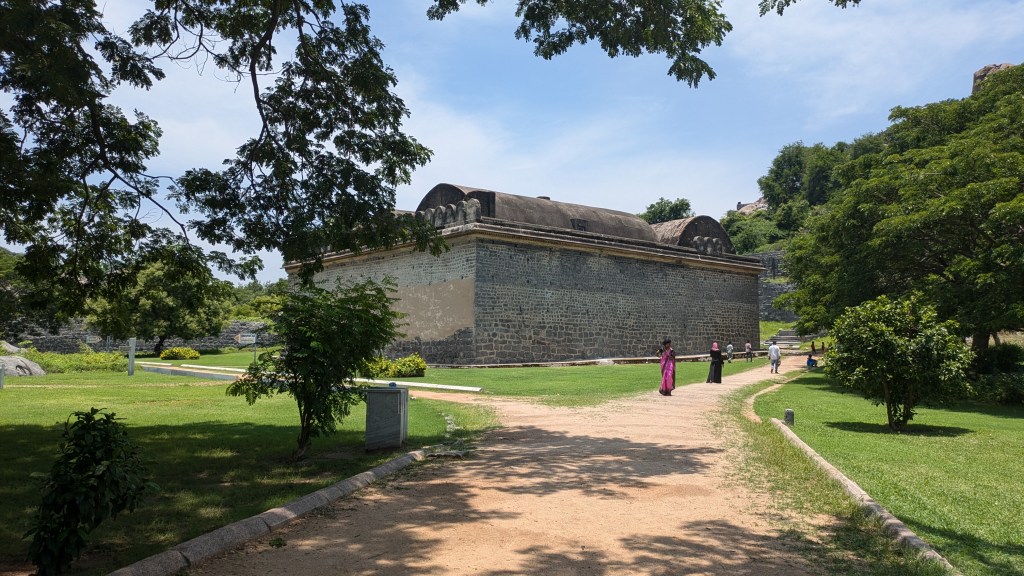
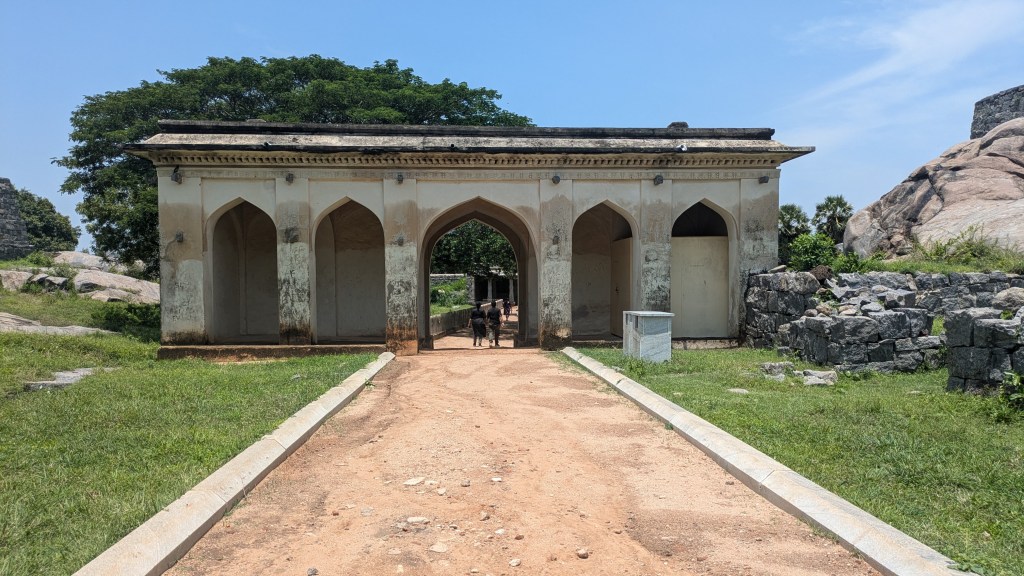
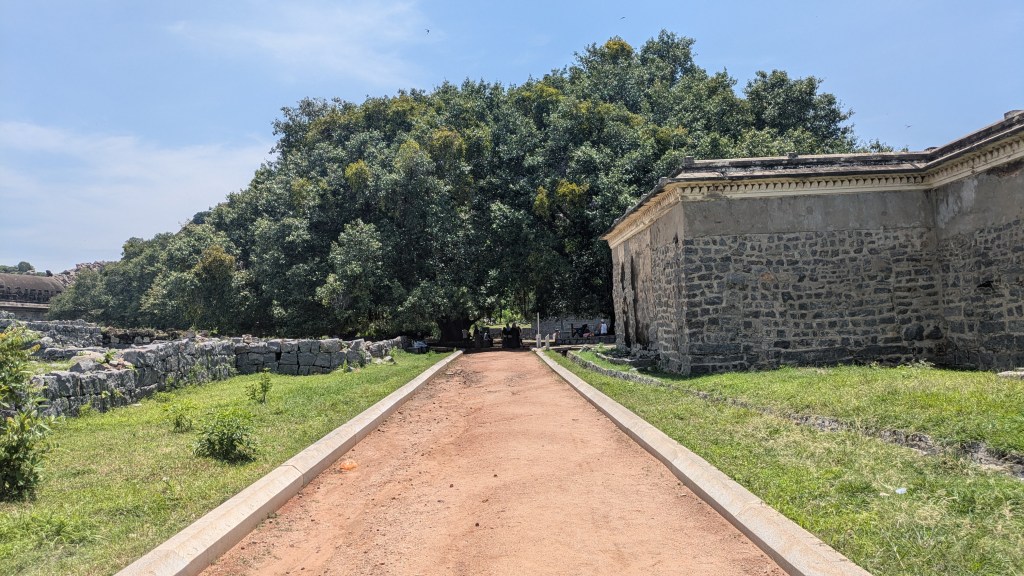
After a three-hour journey, I arrived at Gingee around 10:30 AM. The village bustled with life, and after a short walk guided by Google Maps, I caught my first up-close glimpse of the Rani Fort and Raja Fort. The sun blazed overhead, a perfect day for exploration, and the air was thick with the scent of history—dusty, ancient, and full of stories uncovered and protected by the Archaeological Survey of India (AIS).
I decided to start with Raja Fort, or the King’s Fort, located opposite Rani Fort. On the first glance, I felt sad to see how far Rani Fort is. Men. The path leading to the fort was serene, flanked by greenery and offering a moment of calm before the steep climb ahead. A random man offered me a ride to the Venkataramana Temple, part of my plan for the day, but I politely declined (scared a little because it was an empty road) and continued on foot.
Entering the Fort: A Step Back in Time

The entrance to Raja Fort, with its tunnel-like structure, felt like a portal to another era. As I stepped through, the world outside faded, replaced by the timeless beauty of ancient stone structures.
There were granaries, stables, prisons, and temples, each with its own unique story. The small pond nestled within the fort’s walls was a refreshing sight, a reminder that even in its heyday, the fort was not just a place of defense but also a thriving community.
How did they build this? The thought echoed in my mind as I wandered through the mandapam. The knowledge and skill required to create such a fortress seemed almost otherworldly now, especially compared to the minimalistic architecture of today. How are we so dumb? It’s tragic to think how much of this ancient wisdom has been lost through the centuries, wiped away by the shifting tides of power.
Exploring the Fort: A Walk Through History
I climbed to the top of the Kalyana Mahal. This structure, with its pyramid-like roof and Indo-Islamic design, offers stunning views of the fort and surrounding landscapes. The mahal features rooms for women, a small pond, curved verandahs, and staircases on either side of each floor, with terracotta pipes lining the inner walls for water flow.

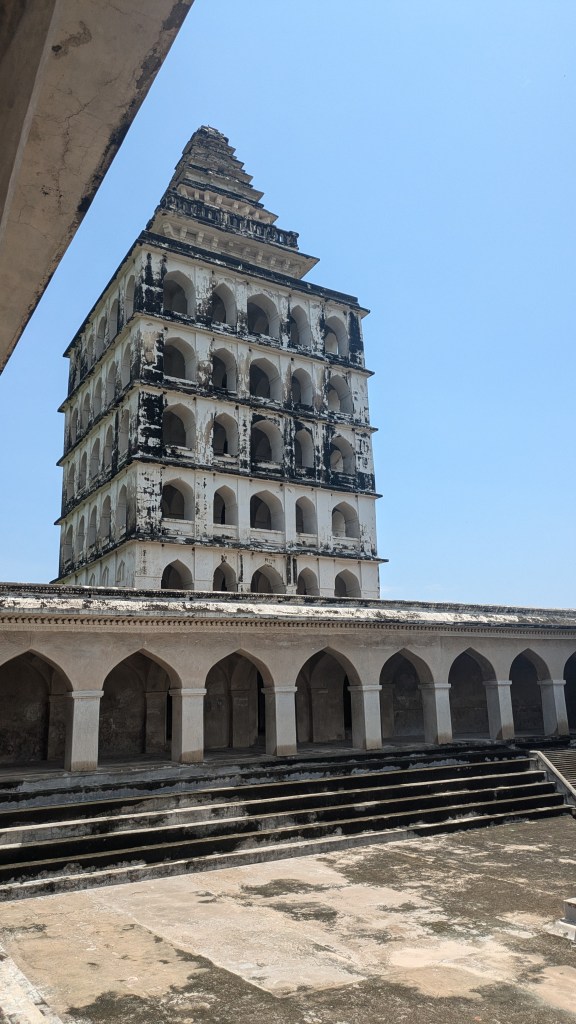


To the south of this hall lies the Elephant Tank, a coolest looking reservior so vast that it was used to bathe elephants during the fort’s heyday. This tank, measuring 58 meters long, 40 meters wide, and 15 meters deep, is surrounded by a cloistered mandapa supported by 134 stone pillars. Historians suggest that this tank may have also served as a swimming pool for the royal family and their close associates.
As I continued my exploration, I couldn’t help but marvel at the fort’s diverse structures. The Gymnasium, a granite building with a wagon-shaped roof located west of the Elephant Tank, once served as a training ground for soldiers and a storage space for war weapons. Further along, I stumbled upon The Granary, a formidable structure near the first entrance of Rajagiri Fort. Its granite walls, about 2 meters thick, housed a massive storage capacity for paddy and other grains, ensuring the fort’s sustenance during sieges.
Next, I ventured towards the steps leading to the Raja Fort’s summit—a daunting 1,500 steps that I decided to leave for another day. Climbing those stairs requires a level of fitness and determination that I wasn’t quite ready to tackle alone. But one day, with the right companions, I’ll return to conquer that climb.
A Moment of Reflection: Under the Banyan Tree

After exploring the fort’s many attractions, I found a quiet spot under a sprawling banyan tree. Here, I took a moment to reflect on my journey, not just to Gingee but in life. Quitting my job had been a significant step, and this trip was my way of finding clarity about what comes next. The fort, with its blend of history and mystery, offered a sense of peace that lightened my heart, mind, and soul.
Visiting the Venkataramana Temple
With my thoughts gathered, I made my way to the Venkataramana Temple, another ancient structure that stands as a testament to the area’s rich cultural heritage. The temple is 5min away from the fort. With its intricate carvings and serene atmosphere, was the perfect end to my visit. I was a bit tired. So I spent hardly 5 min and I decided to save a more in-depth exploration of the temple for my next trip, promising myself that I’d return soon.
The Journey Home: A Tired but Fulfilled Heart
After my visit, I caught an auto back to the bus stand—an easy 100-rupee ride—and boarded the bus to Chennai. The return journey was uneventful, the perfect time to let the day’s experiences settle in. I reached Tambaram by 5:30 PM, grabbed a quick meal at Kumar Mess, and headed home, feeling tired yet fulfilled.
Gingee Fort: A Hidden Gem Worth Exploring
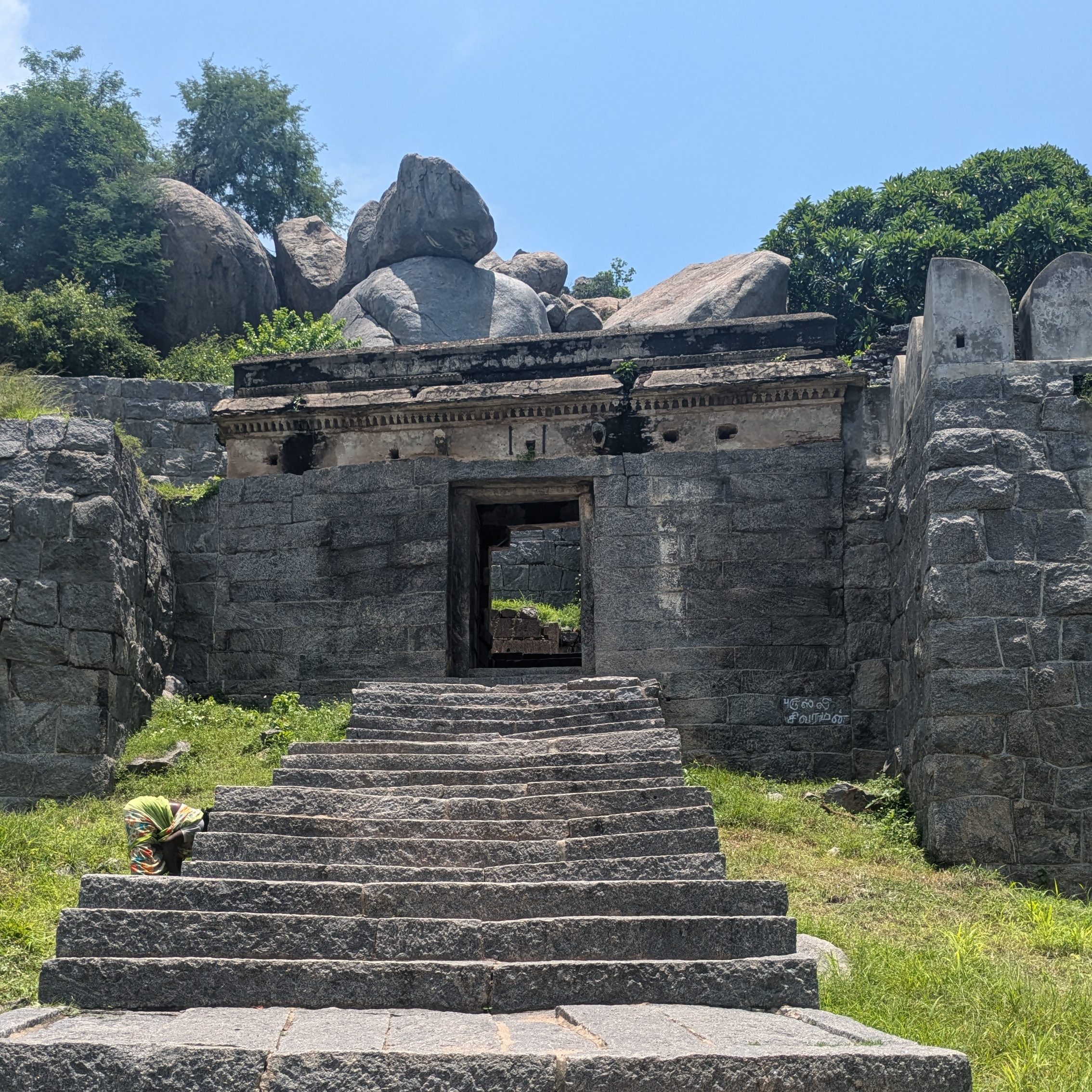
Gingee Fort is more than just a historical site; it’s a journey through time, a place where the past comes alive, and every stone has a story to tell. Whether you’re a history buff, a nature lover, or just someone looking for a weekend getaway, this fort has something for everyone. The architecture, the views, the history—it all comes together to create an experience that is both humbling and inspiring.
If you’re planning a visit, here are some tips:
- Bring a Camera: The fort offers some incredible photo opportunities, from panoramic views to intricate architectural details.Start Early: Begin your journey from Chennai by 6:00 AM to make the most of your day.
- Pack Essentials: Carry water, snacks, and a hat or umbrella to shield yourself from the sun.
- Wear Comfortable Shoes: You’ll be doing a lot of walking, so make sure your footwear is up to the task.
Gingee Fort is a hidden treasure that deserves more attention. Its rich history, stunning architecture, and the sheer scale of the fort make it a must-visit for anyone traveling through Tamil Nadu. So the next time you’re looking for a unique and off-the-beaten-path destination, consider making the journey to Gingee Fort. You won’t be disappointed.
As I reflect on my solo adventure, I’m reminded of the words of Rumi:
“Travel brings power and love back into your life.”
Rumi
This trip to Gingee Fort did just that, rekindling my love for history and exploration while giving me the power to embrace the unknown in my life as well. I am definitely hoping to go there again if a gang is ready to tag along with me.
If you like the post, make sure to like, comment below and share it with your friends.
Don’t forget to check out the Instagram Reels I have made post the trip to get a short glimpse of the experience visually.
FAQs About Gingee Fort
What is the history of Gingee Fort?
Gingee Fort dates back to the 9th century and was significantly expanded during the 16th century by the Nayaks. It has been ruled by various dynasties, including the Marathas, the Mughals, and the British.
What are the main attractions at Gingee Fort?
Key attractions include Krishnagiri Hill, Rajagiri Hill, Chandrayandurg Hill, Talukdar Palace, Kalyan Mahal, Chenjiamman Temple, Anaikulam Pond, Kamalakkani Temple, Watch Tower, and Ranganathar Temple.
Is Gingee Fort suitable for solo travelers?
Yes, Gingee Fort is suitable for solo travelers until you explore lower fort. However, due to its vast size and challenging terrain, it’s recommended to start early, carry essentials, and be cautious while exploring the more isolated areas of the fort. And join some groups for a safer trekking experience.
 A Solivagant's Shoes